

How often should you get a massage? The ideal frequency based on your needs
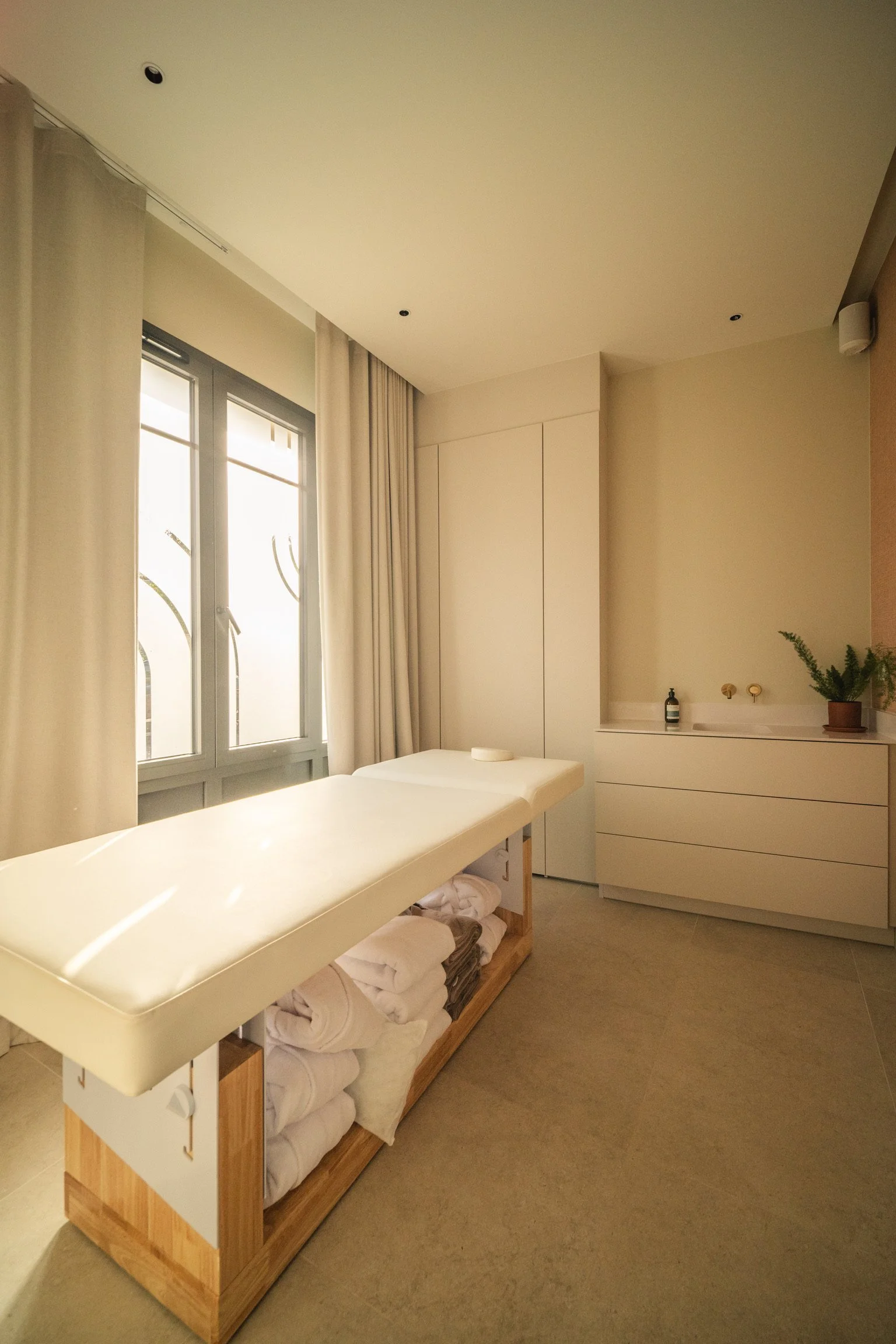
This is one of the most common questions asked at the Beroa Spa reception desk right after a session: “How soon should I come back?” The answer isn’t the same for everyone, and it doesn’t depend solely on your budget or schedule—it depends above all on what you’re hoping to achieve and how your body responds between sessions. From a physical therapist’s perspective, here’s what’s actually happening in your tissues during your first massage, what changes as you establish a regular schedule over time, and how to adjust that schedule to fit your situation.
What Happens in Your Body During Your First Massage
The first session doesn't serve the same physiological purpose as the subsequent ones, and it's important to know this so you won't be disappointed if the effects aren't immediately dramatic.
When the practitioner’s hands make contact, the skin and underlying tissues activate specific sensory receptors—notably Meissner’s and Pacini’s corpuscles, located in the dermis, which are sensitive to pressure and vibration. These receptors send a signal to the central nervous system, which, in turn, reduces the activity of the sympathetic nervous system (the “fight-or-flight” system) and allows the parasympathetic nervous system to take over. It is this shift that explains the sensation of gradual relaxation during the session: a slower heart rate, lower blood pressure, and deeper breathing.
But for a first massage, this process often starts at a higher-than-average level. A body that has never or rarely been worked on manually takes a little longer to “let go” completely—the fascia, the connective tissue that envelops the muscles, may offer more pronounced initial resistance, particularly in areas of long-standing tension. This is also why mild muscle soreness in the hours following a first massage is perfectly normal, as we explain in our article on best practices after a massage: the body is experiencing a type of work it isn’t yet accustomed to.
What Changes With Repetition: The Cumulative Effect
That's where frequency really comes into its own from a physiological standpoint—and not just as a marketing pitch.
Tissue adhesions do not have time to fully reform. When the fascia are worked on, the small adhesions that restrict sliding between muscle layers loosen up. After a single session, these adhesions tend to gradually reform over several weeks. But if the next session takes place before this complete return to the initial state, each massage starts from a slightly more supple baseline than the previous one—this is the very principle of the cumulative effect, as opposed to an isolated massage, which always returns to the starting point.
The pressure tolerance threshold changes. A body accustomed to regular massage can tolerate deeper work more quickly, without the initial resistance phase observed during a first massage. This is a genuine neuromuscular adaptation: sensory receptors gradually learn to no longer interpret manual pressure as a potential threat, allowing the practitioner to work more effectively on deep tension from the start of the session.
Basal cortisol levels can decrease in a sustained manner. A single session lowers cortisol temporarily, lasting for the duration of the session and a few hours afterward. However, repeated sessions at regular intervals appear to lead to a more lasting decrease in basal cortisol levels—a mechanism comparable to the one we describe for regular exposure to the forest in our article on oxygenation through pine trees. In both cases, it is not the intensity of a single exposure that matters, but rather the repetition of a relaxation signal frequent enough for the body to permanently readjust its baseline stress threshold.
Proprioception becomes more refined. With regular practice, many of our clients report a greater awareness of their own bodies—the ability to detect tension building up before it becomes painful. This is an indirect benefit of repetition that is rarely highlighted, but it tangibly changes the way we manage our bodies on a daily basis between sessions.
Endorphins and the Memory of Well-Being. Each session stimulates the release of endorphins—natural painkillers produced by the central nervous system—which contribute to the feeling of lightness experienced after a massage. With repeated sessions, some practitioners observe a form of associative memory: the body gradually “recognizes” the context of the massage—the environment, the touch, the preceding hammam ritual—and begins to shift into a state of relaxation more quickly with each new session, almost before the massage even begins. This is one of the reasons why our regular clients often tell us they feel relaxed as soon as they settle into the treatment room, whereas a first-time massage usually takes several minutes to achieve that same state.
How many sessions does it take to see lasting results?
This is a logical question once you understand the principle of the cumulative effect: if each session starts from a slightly better baseline than the previous one, how long does it take for that change to become truly lasting—and no longer just temporary?
There is no universal figure, but our team’s clinical experience aligns with what the literature on connective tissues generally suggests: the first three to four sessions, performed at frequent intervals (weekly or every two weeks, depending on the situation), serve as a “priming” phase—they help loosen the oldest adhesions and lower the tissue’s initial resistance threshold. It is often starting with the fourth or fifth session that our clients report a change that begins to last over time, even as subsequent sessions become more spaced out.
This does not mean that a single massage is useless—it produces a real and immediate effect—but rather that achieving lasting change (less daily tension, more restful sleep, better management of everyday stress) structurally requires several sessions in quick succession before you can space them out without losing the benefits you’ve gained.
Why Frequency Matters Just as Much as the Massage Itself
A single massage produces real, though temporary, benefits: muscle relaxation, improved circulation, and calming of the nervous system. These benefits gradually fade over the following days as the stresses of daily life—posture, stress, and physical activity—take over again.
This is a principle we see in almost every aspect of physical recovery: it’s not the intensity of a single session that brings about lasting change—it’s consistency. A massage every six months provides temporary relief but does not permanently alter the tension patterns that have developed over the years. Conversely, a regular routine prevents the body from ever fully returning to square one—each session builds on a slightly better foundation than the previous one, exactly as we just explained regarding fascial adhesions and baseline cortisol levels.
The Pace That Fits Your Goal
There isn't just one "right" frequency: it depends on what you're trying to achieve and the initial condition of your fabrics.
Relaxation and Stress Management
For general well-being—to unwind and release tension built up from work or daily life—a monthly schedule is generally sufficient to maintain a lasting state of relaxation, without the benefits fading completely between visits. This frequency best aligns with the window of time for the gradual reforming of fascial adhesions mentioned above: a one-month interval generally allows you to enjoy the cumulative effect without overdoing it.
Sports Recovery
If you engage in regular physical activity—cycling, surfing, running, or simply long walks along the Bassin—your body accumulates microtraumas in the muscles that benefit from more frequent care, especially after intense exertion. We explain this approach in detail in our article on sports recovery massage in Arcachon. Depending on the intensity of your activity, a schedule of every two to three weeks—or even weekly during periods of high activity—is often more effective than a standard monthly massage; the tissue tolerance threshold mentioned above is particularly helpful in allowing for more frequent sessions without excessive sensitivity.
Chronic pain and persistent tension
For long-standing tension—such as a back that remains stiff despite rest or recurring neck pain—the initial treatment schedule should be more frequent to help break a long-standing pattern of tension. We often recommend more frequent sessions during the first few weeks, before gradually spacing them out as the condition improves. We explore this concept in our article “Why Does My Back Remain Tense Even After Rest?”: Rest alone is not always enough to relieve chronic tension, unlike regular manual therapy, precisely because long-standing fascial adhesions do not release on their own without repeated mechanical stimulation.
Pregnancy
During pregnancy, the body undergoes continuous postural and circulatory changes, which call for more frequent follow-up visits than for a standard wellness massage—typically every three to four weeks, with the areas treated adjusted for each trimester. Our article on prenatal massage in Arcachon details this specific approach.
Age and lifestyle also play a role
Beyond the desired goal, two other factors influence the most appropriate frequency. As we age, connective tissues tend to lose their natural elasticity, which may call for slightly more frequent sessions to achieve the same level of relaxation as at a younger age. Conversely, a lifestyle that already includes gentle physical activity—such as regular walking, stretching, or yoga—naturally helps maintain some of the tissue’s flexibility, which sometimes allows sessions to be spaced further apart without losing the benefits gained. It is precisely these contextual factors that we take into account during the initial consultation, rather than relying solely on the stated goal.
Signs That It's Time to Come Back
Beyond general recommendations, your body sends fairly clear signals: a feeling of stiffness that returns more quickly than before, sleep that becomes lighter again, unusual irritability, or simply the impression that the relaxation from your last massage has completely faded. These signs generally indicate that the cumulative effect described above is beginning to wear off, and that it’s time to get back on track rather than wait for a more uncomfortable breaking point.
Is it possible to get too many massages?
Yes, in some cases. Outside the context of intensive, supervised sports recovery, scheduling sessions too close together—without giving the body time to process the work done—can become counterproductive; the tissues need a minimum amount of time to respond to the manipulations and to prevent the loosened adhesions from reforming in a different, sometimes more irregular, way. That’s why we don’t recommend having more than one session per week outside of a specific sports recovery protocol, and why the consultation conducted before each treatment is specifically designed to tailor this frequency to your actual situation, rather than applying a one-size-fits-all rule.
A routine, not just one type of treatment
Adjusting the frequency doesn’t mean systematically repeating the same massage. Many of our regular clients alternate based on their current needs: a classic massage one month, a more comprehensive treatment the next month when they feel a stronger need to unwind, or a visit to the hammam on its own between two more comprehensive sessions to maintain the benefits without dedicating as much time to it.
Clay wraps also naturally fit into this rotation. Depending on the color chosen during the consultation—green, which is more purifying and suitable for oily skin, or a gentler, soothing option for sensitive skin—the clay works through its absorbent and remineralizing properties: it draws out surface impurities while releasing minerals into the skin’s outer layers. Many of our clients particularly appreciate it for its draining effect, which alleviates the sensation of heavy legs or fluid retention—a benefit that complements the more muscular and fascial action of massage. Incorporating a clay wrap between two massage sessions allows you to vary the sensations while continuing to pursue a goal of overall well-being, without making your routine monotonous.
It's also a good way to keep up the habit without letting it become a routine.
Frequently Asked Questions About How Often to Get Massages
Is one massage a week too much? Not necessarily, especially during the initial phase of relieving chronic tension or as part of an intensive sports recovery program supervised by your practitioner. For general wellness purposes, however, it’s rarely necessary, and we generally recommend a monthly schedule once the initial phase is over.
Can I space out my sessions if I’m going on vacation or going through a busy period? Yes, no problem. The cumulative effect gradually builds back up once you resume a regular schedule—it isn’t lost permanently, just put on hold. However, you’ll usually need to schedule a few sessions in quick succession to regain the level of relaxation you had before the break.
Is it important to see the same practitioner every time to ensure consistency? It makes it easier to track your progress, since your practitioner can keep track of how your tension levels change from one session to the next. However, it’s not essential: the medical history review conducted before each treatment allows any member of our team to pick up where your previous sessions left off.
In summary: How often should you get a massage, depending on your needs?
Goal Recommended Frequency Relaxation and general well-being About once a month Regular sports recovery Every 2 to 3 weeks Chronic pain (initial phase) Weekly, then gradually less frequently Pregnancy Every 3 to 4 weeks
Our recommendation for Beroa
There is no one-size-fits-all approach, and that is precisely why every session with us begins with a one-on-one consultation. This assessment allows us to tailor not only today’s treatment but also the treatment plan moving forward, based on your specific goals and how your tissues respond—rather than on a generic recommendation found online, including the one in this article.
If you're unsure about which schedule would be best for you, feel free to discuss it directly with your practitioner during your next visit, or check out our FAQ for any practical questions. You can now browse our full range of treatments and book your next session at our spa in Arcachon at a frequency that works for you.