

Oxygenation from pine trees: When the essence of the Arcachon forests becomes a tool for muscle recovery
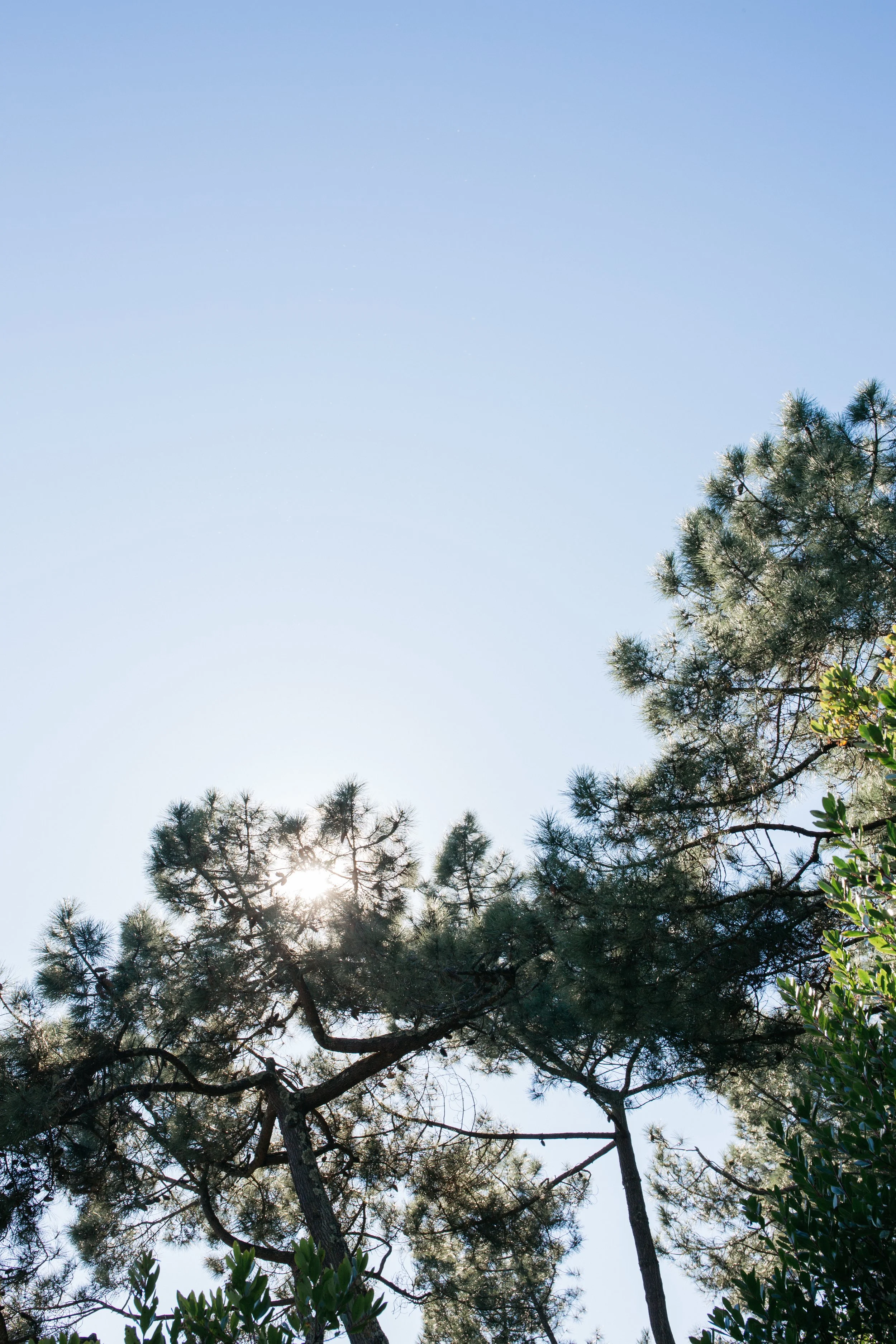
In Arcachon, all you have to do is step outside the city center to find yourself beneath the pine trees. That scent of resin warmed by the sun, that air that makes you feel like you’re breathing more deeply the moment you step under the forest canopy—it’s not just a pleasant sensation. It’s a measurable reality, studied by science, and one that’s directly linked to how your body recovers from exercise or a massage. Here’s a physical therapist’s perspective on what’s actually in the air of our pine forests, what research has found, and how this local essence plays a concrete role in muscle recovery.
What's Actually in the Air of a Pine Forest
When we talk about the “benefits of the forest,” we often remain vague—clean air, tranquility, nature. But there’s a specific chemical explanation for what we feel under the pine trees, and it has a name: phytoncides.
Phytoncides: A Chemical Defense Mechanism That Has Become Beneficial to Us
Phytoncides are volatile organic compounds that trees naturally emit to protect themselves from insects, fungi, and bacteria. The word comes from the Greek phyton (plant) and the Latin cide (to kill)—a chemical weapon, in short, but one that is not harmful to humans. On the contrary: when we breathe them in, our bodies derive measurable benefits.
Not all trees produce them in the same proportions. Conifers—pines, firs, cedars, and spruces—release the most, and even more so during the warmer months, when the heat accelerates their release into the air. This is precisely the family to which the maritime pine belongs, the tree that shapes the entire landscape of the Arcachon Basin.
In addition to these compounds, there is another factor—less well-known but equally well-documented—namely, the concentration of negative ions. Forest air is said to contain up to four times as many of these as urban environments. Several studies have linked these negatively charged particles to a calming effect on mood—an additional factor that complements rather than replaces the action of phytoncides.
Alpha-pinene and monoterpenes: the key molecules
Among phytoncides, two families of molecules are consistently mentioned in the scientific literature: alpha-pinene and limonene, both of which are monoterpenes. These are the compounds that give forest air its characteristic scent, and they are the ones that researchers have learned to measure in the blood and urine of people exposed to a forest environment.
Several studies have shown that these monoterpenes have anti-inflammatory properties and can help stabilize certain immune cells involved in inflammatory responses. So this isn’t just a figure of speech: breathing in the air beneath pine trees exposes your body to a form of aromatherapy that the forest produces on its own, without the need to add anything.
What science actually observes in the body
The concept that provided the framework for this research has a Japanese name: shinrin-yoku, literally “forest bathing,” which is also translated as forest therapy. It is not hiking—it is a deliberately slow and mindful immersion in a wooded environment, practiced in Japan since the 1980s and now studied around the world. The concept arose from a pragmatic observation: faced with an increasingly stressed urban population and rising public health care costs, Japanese authorities sought to scientifically measure what popular tradition had long claimed—that spending time in the forest is good for the body, not just the mind. Since then, Japan has even officially designated a series of forest trails as certified therapeutic sites, based on strict physiological measurement protocols.
A measurable shift toward the parasympathetic nervous system
Japanese researcher Qing Li, one of the most frequently cited authors on the subject, has documented a range of physiological effects following exposure to a forest environment: a drop in blood pressure, a reduction in cortisol levels (the stress hormone), and a slowing of the heart rate. These three markers all point in the same direction: a shift in the autonomic nervous system toward its parasympathetic mode—sometimes called the “rest and digest” mode—as opposed to the “fight or flight” mode triggered by stress and physical exertion.
This is crucial information for understanding the connection to recovery. The body does not repair its tissues, reduce inflammation, or restore its energy reserves in the same way depending on whether it remains in a state of sympathetic arousal or shifts into parasympathetic mode. Yet it is precisely this shift that exposure to the air of a coniferous forest appears to facilitate—and quickly: some studies report measurable effects after just a few hours of exposure.
What exactly does the benchmark study on this topic measure?
Beyond the broad trends, a study published by Qing Li in the journal *Environmental Health and Preventive Medicine* provides precise figures obtained through blood tests taken before and after exposure. The study protocol consisted of a three-day, two-night stay in the forest, with about two hours of slow walking per day—no exercise, just mindful immersion.
The results show a significant increase in the activity of NK (natural killer) cells—the white blood cells responsible for the body’s immune surveillance—on the order of 50% in nearly all participants monitored. Even more notable: this increase in immune activity does not subside immediately. It remains measurable more than 30 days after returning to the city, which led the authors to recommend a monthly trip to the forest to maintain this level of immune activity over the long term—a frequency that is reminiscent of the one also recommended for regular massages.
It should be noted that this specific protocol (two hours of walking per day, over several consecutive days) is the one that has been scientifically measured—this does not mean that a shorter walk has no effect, but simply that this is the duration for which we currently have solid, quantifiable data.
Measurably reduced inflammatory markers
Beyond the nervous system, several clinical studies have shown a decrease in circulating inflammatory markers following regular exposure to the forest—particularly certain pro-inflammatory cytokines. Another line of research, also initiated by Qing Li’s work, shows an increase in the activity of NK (natural killer) cells—immune cells involved in the body’s defense—with effects that can persist for several weeks after a single visit to the forest.
These findings pertain to immunity and inflammation in general—we need to be honest about this: the research does not show that pine phytoncides directly repair muscle fibers. That’s not how it works, and it would be dishonest to claim otherwise.
The Real Connection to Muscle Recovery
This is where the physiological perspective comes into play. Muscle recovery—whether after physical exertion or a deep tissue massage—doesn’t depend solely on what’s happening within the muscle itself. It also depends, to a large extent, on the overall state of the nervous system and the level of systemic inflammation in the body at the time it is attempting to recover.
Why the State of the Autonomic Nervous System Affects Recovery
When the body remains dominated by the sympathetic nervous system—the system associated with alertness, stress, and vigilance—physiological resources are prioritized for immediate action, not for tissue repair. This is an ancient survival mechanism, very useful when facing real danger, but much less suited to our daily lives, where stress is constant but rarely life-threatening.
Conversely, in the parasympathetic state, the body redirects its energy toward restorative processes: digestion, cellular repair, and hormonal regulation. This is precisely the state we seek to achieve after physical exertion or a massage session, so that the work done on the tissues—whether through athletic exertion or a practitioner’s manipulations—can be fully integrated by the body.
What this means in practice after a massage or physical activity
This is where the drop in cortisol and the reduction in inflammation observed after spending time in a pine forest become relevant to muscle recovery: they create the physiological conditions under which the body repairs and regenerates most effectively. A deep tissue massage already stimulates circulation and relaxes the tissues—but if you extend this effect by taking a walk among the pine trees rather than immediately returning to the noise and stress of daily life, you provide your body with a nervous and inflammatory environment that is much more conducive to full recovery.
This is exactly the same logic that underlies our advice on best practices after a massage: what you do in the hours following a treatment is just as important to the benefits as the session itself. In this regard, the Arcachon Bay forest is a readily available resource for extending the effects of a massage—rather than just a postcard.
The Landes Forest and the Arcachon Basin: A Special Case
All of this takes on special significance here in Arcachon, because the forest that surrounds us is not just any coniferous forest. It is the largest man-made forest in Western Europe, and its history is worth knowing.
The maritime pine, the Bassin’s iconic tree
The tree species that dominates this forest by a wide margin is *Pinus pinaster*, the maritime pine, also known as the Landes pine. It is a native species of the Atlantic coast, occurring naturally along the dunes and waterways long before human intervention. Today, it covers most of the approximately 800,000 hectares of the Landes de Gascogne forest, including nearly 100,000 hectares in the Arcachon Basin alone—representing nearly two-thirds of the basin’s total area.
Locally, two state-owned forests border the Bay directly: the La Teste-de-Buch forest and the Lège-Cap-Ferret forest, which together cover more than 6,000 hectares at the heart of a true ecological corridor between the ocean and the lagoon. It is this immediate proximity between the city, the water, and the pine forest that makes Arcachon so special: nowhere else can you go from the sandy beach to the pine grove so quickly.
A forest shaped by humans, a blessing that remains natural
What makes this forest even more unique is that it is almost entirely man-made. Until the mid-19th century, this region was nothing more than a vast, swampy, unhealthy, and virtually uninhabitable wasteland. It was the extensive drainage and reforestation program launched during the Second Empire—building on the work of engineers such as Brémontier and later Chambrelent—that transformed this area into the forest we know today—methodically planted, pine by pine, on what had previously been barren sand.
The fact that this forest is the result of human management does not diminish the physiological benefits it provides: the phytoncides emitted by a maritime pine planted in the 19th century are chemically identical to those of a primary forest. It is a working forest, historically linked to the harvesting of resin and timber, which has, by necessity, become a wonderful place for relaxation and well-being—a transformation that few forests in France can claim to have undergone with such intensity.
This history has not been a smooth ride. In August 1949, a devastating fire ravaged thousands of hectares between Bordeaux and Arcachon, claiming dozens of lives and destroying nearly half of the Landes Forest as it existed at the time. The subsequent reconstruction gave rise to the managed forest we know today, with its neatly aligned plots and firebreaks—a layout designed for resilience as much as for production. Walking beneath these pine trees today is also a journey through the result of that reconstruction—less spontaneous than a natural forest, but just as generous in the benefits it offers to those who come here to breathe deeply.
How Beroa Incorporates This Local Ingredient into Its Skincare Products
For us, this line of thinking isn't just theoretical: it lies at the heart of how we've designed some of our care services.
The Hammam with Maritime Pine Aromatherapy
Our hammam features an aromatherapy blend of maritime pine and eucalyptus—a choice that is by no means random. The humid heat of the hammam opens the airways and promotes the absorption of volatile compounds, which is exactly how phytoncides work in the forest. It’s a way to condense, into a 30-minute break, some of what the Bassin forest naturally offers to those who take the time to stroll through it. We discuss this step in greater detail in our article on the benefits of the hammam for the body and skin.
Why combine pine and eucalyptus, specifically?
It is no coincidence that these two essential oils are combined—and not any other combination: they actually work on two complementary levels. Maritime pine, through its phytoncides and alpha-pinene, acts primarily on the systemic level we detailed above—calming the nervous system and reducing general inflammation. Eucalyptus, on the other hand, targets a more localized and immediate effect: its main molecule, 1,8-cineole (also known as eucalyptol), is recognized for its expectorant and anti-inflammatory properties in the respiratory tract. It stimulates the movement of the bronchial cilia, which literally facilitates deeper, clearer breathing.
However, deep breathing is precisely what allows you to effectively inhale larger quantities of the pine’s compounds. In the hot, humid atmosphere of the hammam—an environment that specifically promotes absorption through the respiratory tract—eucalyptus plays an almost facilitating role: it clears the airways so that the body can better benefit from the more comprehensive effects of pine. It is this complementary relationship—rather than simply a combination of pleasant scents—that justifies the choice of this duo in our hammam.
Océopin cosmetics sourced from the same forest
The massage oils we use—particularly those from the Océopin line—are formulated with ingredients sourced from this very same maritime pine forest along the Atlantic coast—a choice consistent with the belief that skincare should not be imported from elsewhere, but should draw on the very best this region has to offer. During the consultation that precedes each massage, it is also this maritime pine oil that is most often recommended as a first-line treatment for muscle recovery, particularly after physical exertion—as we explain in our article on sports recovery massage in Arcachon.
Extend these benefits beyond a single spa session
The connection between pine forests and wellness doesn't end at the spa's door. Here's how to make the most of it in your daily life in Arcachon.
Take a walk in the forest after exercising or getting a massage. Instead of heading straight back to your car or resuming your activities right away, treat yourself to a 20- to 30-minute walk in one of the forests of the Bassin—the forests of La Teste-de-Buch and Lège-Cap-Ferret are both easily accessible. It’s the perfect time to extend the state of relaxation brought on by your treatment.
Prioritize regular visits over occasional exposure. Researchers agree on this point: weekly exposure to a forest environment sustains the physiological benefits for a longer period than a single outing, even if it is intense. It’s the same principle as with regular massages: repetition ensures that the effects last over time.
Truly disconnect while walking. The benefits observed in studies are linked to paying attention to the surroundings—the sounds, the smells, the light filtering through the tree canopy—rather than simply walking through quickly and distractedly. Putting your phone aside for a few minutes makes a real difference.
Combine a walk in the forest with staying hydrated. Just as after a massage, the body continues its detoxification and regulatory processes during and after time spent in the forest. Drinking enough water remains an important habit, whether you’ve been walking among the pine trees, had a massage, or done both on the same day.
Choose the right time of day. Phytoncides are released in greater quantities on warm, sunny days, especially in the late morning and early afternoon. Going for a walk at that time, rather than in the middle of the night or in very cold weather, maximizes exposure to the active compounds—a simple detail, but one that makes a real difference in the intensity of the desired effect.
In a Nutshell: Forests and Recycling—Key Takeaways
Benefits of the Pine Forest Documented Mechanism Decreased cortisol and blood pressure Shift toward the parasympathetic nervous system Reduction in inflammatory markers Effects of monoterpenes (alpha-pinene, limonene) Improved mood High concentration of negative ions Enhanced immune activity (NK cells) Prolonged inhalation of phytoncides Conditions conducive to muscle recovery Combination of the above effects; no direct action on the muscle
A local resource: a recovery mechanism in its own right
The air you breathe beneath the pine trees of the Arcachon Basin is more than just a pleasant backdrop for your vacation or daily life. It is a chemically active environment, and scientific research has now documented its effects on the nervous system, inflammation, and the body’s overall recovery. Whether through a walk in the forest, our hammam featuring maritime pine aromatherapy, or our treatments formulated using resources from this very region, this local essence remains a central theme in the approach we take at Beroa.
If you’d like to discuss this in more detail or learn how to incorporate this aspect into your next treatment, our team is here to advise you during your visit to our spa in Arcachon. You can also check out our FAQ for any other practical questions you may have before your visit.