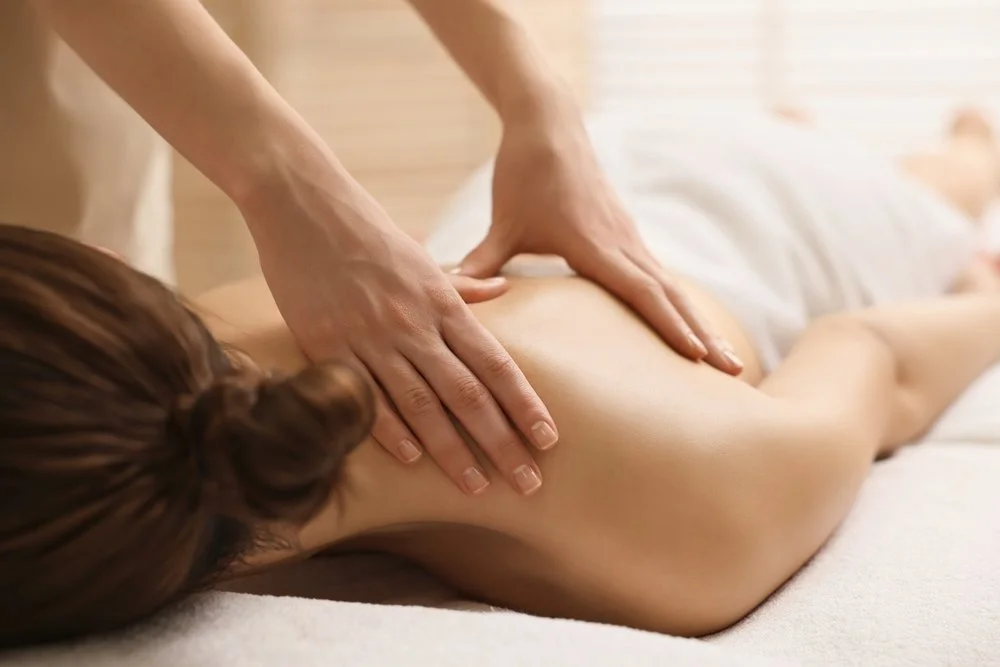
Why Does My Back Stay Tense, Even After Rest?—How to Really Relax It | Spa Arcachon Beroa
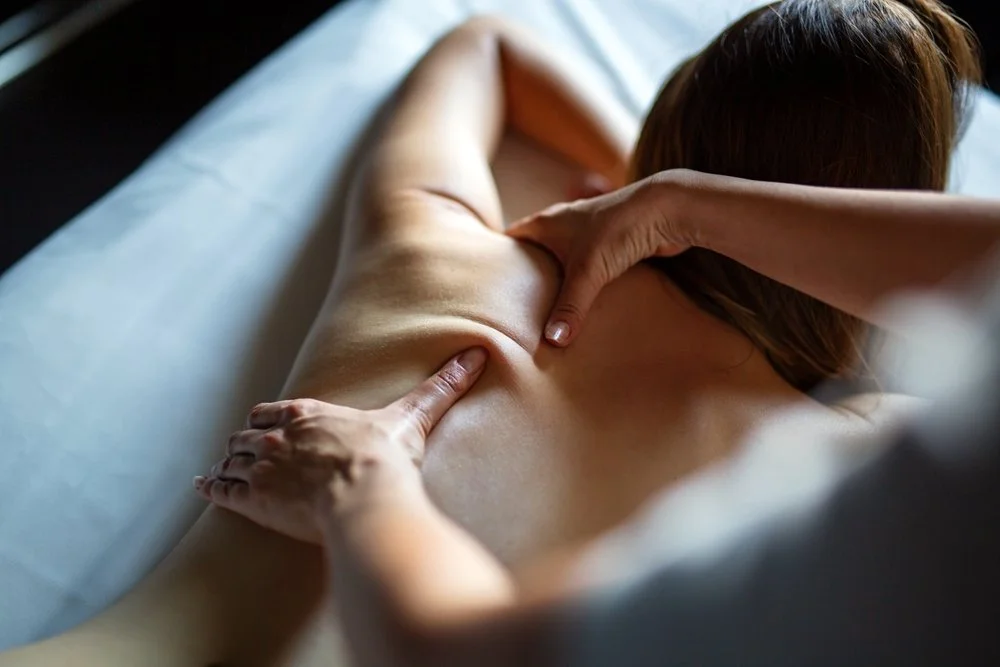
You have rested.
You have slept more.
You have slowed your pace.
Yet, your back remains tense.
A contracted area between your shoulder blades.
A sensation of heaviness in your trapezius muscles.
A lower back that never fully relaxes.
At our Arcachon spa, we frequently observe that these tensions are not due to a lack of rest,
but rather to a muscular and nervous organization that has developed over time.
To understand this, it is essential to examine what is truly happening within your body.
Deep muscle tension (not superficial)
Back tensions rarely involve only the 'visible' muscles.
They often involve the following:
the upper trapezius muscles (responsible for shoulder elevation)
the levator scapulae muscle (often responsible for upper back discomfort)
the rhomboid muscles (located between the shoulder blades, often continuously contracted)
the paravertebral muscles (situated along the spine)
and sometimes the quadratus lumborum (in the lower back)
These muscles play a crucial role in posture. They are designed to:
stabilize
maintain
compensate
However, when they are subjected to excessive demands, they can no longer fully 'switch off'. This condition is then referred to as chronic muscle hypertonia.
Why rest is not enough (physiological approach)
Rest primarily addresses the following:
metabolic fatigue
muscle micro-tears
However, in the case of back tension, the issue is neuromuscular. The muscle continuously receives contraction signals via the nervous system.
Specifically, this means:
the alpha motor neurons remain active
the muscle's baseline tone increases
relaxation becomes incomplete
Even at rest, the muscle remains partially contracted. This is why:
you wake up already feeling tense
you never experience a sensation of complete release
The role of the nervous system and stress
The key factor here is the autonomic nervous system.
In situations of chronic stress:
activation of the sympathetic system
increased muscle tone
shallow (thoracic) breathing
This directly impacts:
the trapezius muscles
the scalene muscles
the sternocleidomastoid muscle
the intercostal muscles
Consequently, the effects on the body are significant:
elevated shoulders
restricted rib cage
persistent tension in the upper back
The body remains in an "alert" state, even during periods of rest.
The key role of fascia
Another element often overlooked is the fascia. These are connective tissues that envelop the muscles.
When subjected to:
repeated strain
stress
a lack of mobility
They become:
more rigid
less hydrated
less pliable
This creates a sensation of a "locked back." Even if the muscle itself is not painful, movement becomes restricted.
Why Certain Areas Remain Tense
Between the shoulder blades (rhomboids and middle trapezius muscles)
overworked due to screen posture
often in prolonged isometric contraction
Upper Trapezius Muscles
stress-induced hyperactivity
compensation for weaker deep muscles (e.g., insufficient lower trapezius)
Lower Back (quadratus lumborum and lumbar muscles)
excessive stabilization
lack of pelvic mobility
These areas do not recover naturally as they are constantly engaged.
What Truly Works
To effectively alleviate these tensions, it is essential to address several factors:
Reduce muscle tone (through heat)
Heat influences:
the body's muscle and nerve connections
the expansion of blood vessels
the easing of reflex muscle tension
The hammam offers:
overall relaxation
preparation of the tissues
enhanced receptivity to manual treatments
At our Arcachon spa, this stage is crucial. It prepares you both physically and mentally for the treatment itself.
Deep tissue work
Massage influences:
muscle fibers
fascial restrictions
blood circulation
Slow and deep work allows for:
to alleviate tension
to restore mobility
to restore elasticity
Regulating the Nervous System
An effective treatment also influences:
the parasympathetic nervous system
breathing
overall relaxation
Without this, muscles tend to re-contract.
Why Clay Offers Genuine Benefits
Clay is particularly beneficial for:
its thermal effect (heat retention)
its absorbent effect
its action on tissues
It enables:
to prolong muscle relaxation
to promote exchanges
to soothe overworked areas
It acts as a 'relaxation extender'.
Tangible Benefits for Your Body
After a well-executed treatment, you will experience:
a decrease in muscle tone
improved shoulder blade mobility
fuller breathing
a reduction in neck tension
Additionally:
a decrease in overall stress
improved recovery
a feeling of a 'rebalanced' body
These are lasting effects, not merely immediate ones.
How the Arcachon Spa Setting Enhances the Effects
The context plays a significant role:
a calm environment
disconnection
a slowed pace
This facilitates the activation of the body's natural relaxation response, leading to:
deeper relaxation
improved integration of the treatment
Our Approach at Beroa
At Beroa, we combine:
body assessment
understanding areas of tension
targeted approach
holistic approach
Each treatment aims to:
reduce tension
restore mobility
rebalance the body
Does Your Back Remain Tense Despite Rest?
The Back De-stress treatment has been specifically designed to target:
the trapezius muscles
the rhomboids
the paravertebral muscles
deep back tension
Through a targeted and progressive approach, it provides genuine and lasting relief.
For maximum effectiveness, we recommend combining it with a hammam session at our spa in Arcachon.