

Preparing Your Body for the Heat | Spa Arcachon Beroa
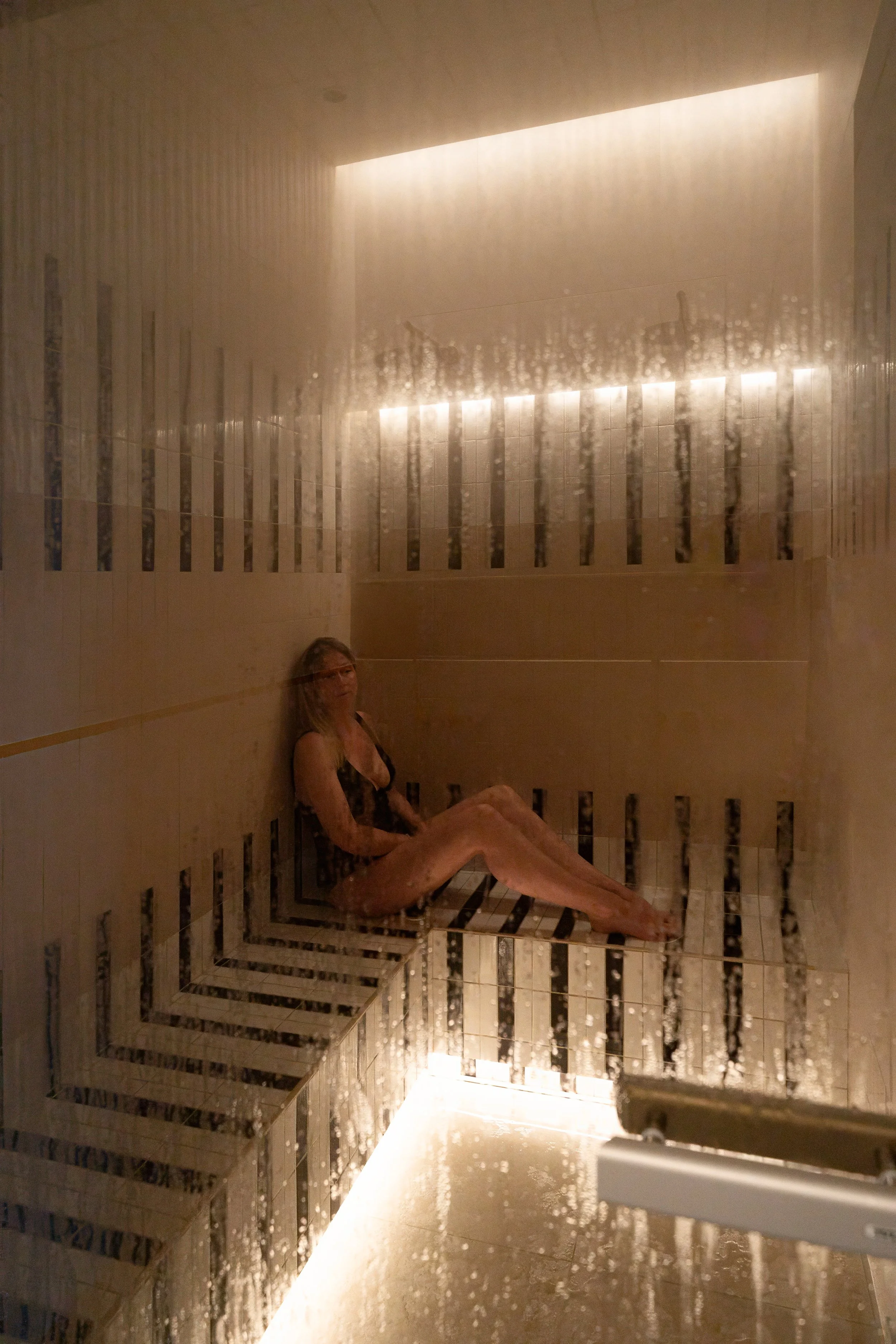
The physiological role of the steam room in improving fascial elasticity before massage
In the major therapeutic traditions of the Mediterranean basin and the Middle East, there is an age-old intuition that modern medicine now expresses in scientific terms: the body must be prepared before it is treated. The hammam—this ritual of humid heat, steam, and silence—is not merely a preliminary moment of relaxation. From a physiological standpoint, it is a sequence of tissue conditioning that profoundly transforms the quality of connective structures and makes the massage infinitely more effective.
To understand why, we must look at the fascia: those membranes of connective tissue that envelop, separate, and interconnect every muscle, organ, and bone in the human body. It is there, within this invisible architecture, that the moist heat of the hammam exerts its most profound effects.
1. Fascia: A Living Structure That Is All Too Often Overlooked
For decades, physiology focused primarily on muscles, bones, and nerves. Fascia, on the other hand, was viewed as nothing more than a passive covering—a biological “wrapping” with little functional purpose. The work of surgeon Jean-Claude Guimberteau on fascial microvacuoles, as well as the research of Carla Stecco at the University of Padua, has radically overturned this view.
Today, the fascia is recognized as a distinct organ, equipped with proprioceptors, nociceptors, contractile cells (myofibroblasts), and a remarkably complex hydrodynamic network. It responds to pressure, heat, stretching, and movement. Better yet: they “memorize” repeated mechanical stresses and prolonged postures, thickening, retracting, or losing their glide when subjected to chronic stress.
The collagen structure and its thermomechanical behavior
Fascial tissue is primarily composed of collagen fibers (types I and III), elastin, and a fundamental substance called the extracellular matrix—a viscoelastic gel in which cells and fibers are embedded. This matrix consists mainly of proteoglycans and hyaluronic acid, which play a crucial role in lubricating the fascial layers against one another.
The key property to understand is thixotropy: the fascial extracellular matrix behaves like a gel that, under the influence of heat and mechanical mobilization, becomes less viscous and more fluid. In other words, when cold and at rest, the fasciae are rigid, not very slippery, and resistant to deformation. When warmed, they gradually become more supple, more permeable, and more responsive to manipulation.
This is exactly where the hammam comes into play.
2. How humid heat affects the body — physiological mechanisms
2.1 Increase in tissue temperature
The steam-saturated air in a hammam typically ranges from 40 to 50 °C, with a humidity level close to 100%. This combination is significant: unlike the dry heat of a sauna (80–100 °C), moist heat penetrates the tissues more evenly and deeply, because water vapor conducts heat much more efficiently than dry air.
After ten to fifteen minutes of exposure, the subcutaneous and superficial intramuscular temperature rises by 1 to 3 °C. This increase, though seemingly modest, is sufficient to trigger a cascade of major biochemical and mechanical effects:
Peripheral vasodilation: The arterioles dilate, significantly increasing local blood flow (up to 10 times the resting flow rate in some studies). This substantially increases the supply of oxygen, nutrients, and signaling molecules to the connective tissues.
Increased enzymatic activity: the enzymes involved in collagen remodeling (matrix metalloproteinases) exhibit optimal activity at temperatures between 38 and 42 °C.
Alteration of collagen cross-links: heat affects the hydrogen bonds and intermolecular cross-links that stabilize collagen fibers, reducing their structural rigidity without reaching the denaturation threshold (around 60–65 °C for type I collagen).
2.2 Hydration of the fascial layers and liquefaction of hyaluronic acid
Hyaluronic acid (HA) is the lubricating molecule in the fascial gliding planes. It is produced locally by specialized cells called fibroblasts, and its viscosity is directly dependent on temperature and the tissue’s hydration level.
Recent studies (notably those by Stecco’s team, 2011–2018) have shown that during prolonged inactivity, static postures, or chronic stress, hyaluronic acid polymerizes into dense, viscous aggregates that “glue” the fascial layers together, creating what clinicians call areas of restricted glide or fascial adhesion.
The humid heat of the hammam has a direct effect on this polymerization: by raising tissue temperature and increasing hydration in both the superficial and deep layers, it promotes the depolymerization of hyaluronic acid, restoring its fluid and lubricating properties. The fascial planes regain their natural glide. The body literally loosens up.
2.3 Decrease in reflex muscle tone
In addition to its direct effects on connective tissue, heat acts on the peripheral nervous system by modulating the activity of neuromuscular spindles—proprioceptive receptors located within the muscle that are responsible for basal tone. Heat reduces their sensitivity to stretching, thereby diminishing myotatic reflex responses and allowing for deeper, less defensive muscle relaxation.
This neurological relaxation is fundamental: a muscle whose nervous system has let down its guard responds very differently to the pressure and movements of a massage. It no longer resists the manipulation; it welcomes it.
3. The Hammam as a Preparation Protocol: What the Studies Tell Us
The scientific literature on the combined effect of heat and massage is still in its infancy, but the evidence is consistent. A study published in the Journal of Athletic Training (Draper et al., 2004) showed that a 3–4°C increase in intramuscular temperature prior to stretching significantly increased tissue compliance (mechanical flexibility) compared to cold stretching. Similar results have been documented in the field of physical therapy for scar tissue: prior moist heat improves collagen deformability and reduces resistance to manual manipulation.
In the context of the traditional hammam massage, two phases deserve special attention:
The exfoliation phase (kessa): Performed on skin that has been softened and superficial fasciae prepared by heat, this exfoliation is not merely a cosmetic treatment. It mechanically mobilizes the superficial fascia (dermal and hypodermic fascia), stimulates the skin’s mechanoreceptors, and triggers a parasympathetic relaxation response. On tissue that has already been warmed and hydrated, this mobilization is incomparably more effective and less aggressive than on cold tissue.
The beldi soap massage phase: black soap, made from olive oil and vegetable lye, creates an additional lubricating film which, combined with the softened skin, allows for deep pressure and stroking without causing painful friction. The kneading movements reach muscle and fascial layers that, without thermal preparation, would remain inaccessible without causing pain.
4. The ideal sequence: from the steam room to the massage, a seamless transition
Understanding physiology also means knowing how to structure the sequence over time. The effectiveness of the steam room preparation does not last indefinitely: the window of opportunity for tissue work occurs within 20 to 40 minutes after leaving the steam room, while tissue temperature remains elevated and the fascia retain their increased fluidity.
An optimal protocol is structured as follows:
Phase 1 — Acclimatization (5–10 min): Gradual entry into the warm room. The temperature increase must be gradual to avoid triggering a sympathetic stress response (adrenaline, peripheral vasoconstriction) that would counteract the desired benefits.
Phase 2 — Thermal immersion (15–20 min): time spent in a heated room. This is where the main changes take place: vasodilation, loosening of the extracellular matrix, and reduction of neuromuscular tone. Oral hydration before and during this phase is essential to maintain tissue turgor and prevent dehydration, which would paradoxically cause the fasciae to stiffen.
Phase 3 — Exfoliation and lathering (10–15 min): mechanical mobilization of the superficial fascia on prepared tissue. Work on the hypodermic layer and the superficial fascia.
Phase 4 — Transition and Rest (5–10 min): a recovery period between the steam room and the massage. Light rehydration. Room temperature is maintained. This time is not wasted: it is a phase of neurological integration during which the autonomic nervous system completes its shift toward parasympathetic dominance.
Phase 5 — Massage: On a body prepared in this way, massage techniques—whether Swedish massage, deep tissue massage, myofascial release, or traditional massage—achieve a depth and tissue response far beyond what they can achieve on an unprepared body.
5. Clinical indications and the populations that benefit most
People suffering from chronic muscle tension
Individuals with chronic muscle tension in the trapezius, rhomboid, or paravertebral muscles—often linked to prolonged screen time or accumulated stress—typically exhibit thickening and progressive dehydration of the fascia in these areas. Thermal preparation in the steam room can make these areas accessible to effective manual therapy where “cold” massage sessions previously encountered deep resistance.
Athletes in recovery
After intense exercise, muscle and connective tissue exhibit inflammatory micro-lesions and localized interstitial edema. While the steam room is not recommended in the first 24 hours after exercise (when heat could aggravate acute inflammation), it becomes a valuable recovery tool after 48 hours, promoting lymphatic circulation, the clearance of metabolites, and the restoration of fascial elasticity.
People undergoing scar tissue rehabilitation
Scar tissue, which is rich in poorly organized type III collagen, is particularly stiff and resistant to mobilization. Moist heat, by reducing the viscosity of the extracellular matrix and optimizing metalloproteinase activity, facilitates gradual remodeling of these areas when they are subsequently treated manually.
Seniors
As we age, hyaluronic acid production decreases, collagen fibers become more entangled and lose elasticity, and tissue dehydration gradually sets in. By combining heat and hydration, the hammam helps partially counteract this fascial aging, making manual therapy more comfortable and effective.
6. Precautions and Contraindications: Informed Preparation
Enthusiasm for the benefits of the hammam should not overshadow its genuine contraindications. Improper use of the heat can have the opposite effect of what is intended—or even expose users to serious risks. It is therefore important to distinguish between absolute contraindications, relative contraindications requiring medical advice, and general precautions.
Absolute contraindications
These situations result in a complete ban from the hammam, with no exceptions:
Uncontrolled cardiovascular conditions: congestive heart failure, severe untreated hypertension, recent history of myocardial infarction or stroke (within the past 6 months). The massive vasodilation caused by heat places a significant strain on the heart that these weakened hearts cannot withstand.
Severe deep vein insufficiency or active venous thrombosis: heat promotes vasodilation and may dislodge a thrombus. There is a real risk of thromboembolism.
Uncontrolled epilepsy: intense heat can lower the threshold for triggering a seizure.
Fever and ongoing acute infections: the body’s already compromised ability to regulate temperature cannot withstand an additional thermal load.
Pregnancy in the first and third trimesters: Fetal hyperthermia, even if mild and brief, poses a documented teratogenic risk during the first trimester. In the third trimester, heat can contribute to severe maternal hypotension and premature contractions.
Relative contraindications (medical advice required)
These situations do not automatically rule out the use of a steam room, but they do require a prior medical evaluation and an appropriate protocol (shorter duration, moderate temperature, supervision):
Type 1 or 2 diabetes with peripheral neuropathy: loss of thermal sensitivity increases the risk of unnoticed burns. In addition, heat affects the absorption of subcutaneous insulin.
Multiple sclerosis: Heat can temporarily exacerbate neurological symptoms (Uhthoff’s phenomenon). A steam bath does not worsen the underlying condition, but it can cause significant temporary fatigue or muscle weakness.
Controlled and stabilized high blood pressure: provided that medical supervision is maintained and blood pressure is under control, moderate physical activity is often tolerated—but this should be discussed with your doctor.
Extensive skin conditions (active psoriasis, secondary infection in eczema, open wounds): heat and humidity can worsen certain lesions or promote secondary infection.
Chronic kidney disease: fluid and electrolyte imbalances caused by sweating can further compromise already impaired kidney function.
Use of vasoactive drugs, diuretics, or anticoagulants: these medications alter the cardiovascular response to heat or increase the risk of bleeding in the event of a fall due to dizziness.
General Precautions
Even for people with no medical contraindications, there are several guidelines to follow to ensure a safe and beneficial experience:
Hydration: Drink at least 500 ml of water before your session, and continue to stay hydrated during and after. Sweating in a steam room can result in the loss of several hundred milliliters of fluid over 20 to 30 minutes. Even mild dehydration paradoxically causes the fascia to stiffen and negates some of the desired benefits.
Duration and gradual progression: For your first session or after a long break, limit your exposure to 10–12 minutes, gradually increasing the duration in subsequent sessions. The body needs time to adjust its thermoregulatory mechanisms.
Watch for warning signs: if you feel unwell, dizzy, have heart palpitations, a severe headache, or nausea, you should leave the room immediately and lie down in a cool area. These signs may indicate the onset of heatstroke or orthostatic hypotension.
Never undergo the test on an empty stomach or after a heavy meal: low blood sugar increases the risk of dizziness, while digestion diverts blood flow to the internal organs at the expense of the extremities.
Allow time to recover between each visit to the hot room, alternating with stays in a temperate area or a lukewarm shower—never a sudden cold shower, to avoid a vasomotor shock.
Dehydration remains the most common and easily preventable complication. But it is the knowledge of all these precautions—and their strict adherence—that makes the hammam a therapeutic tool rather than merely a source of comfort.
7. The Beroa Approach: Where Age-Old Intuition Meets Modern Rigor
What traditional hammams have been practicing for centuries through empirical tradition—that precise sequence of heat, water, exfoliation, and massage—corresponds exactly to what research in connective tissue biology now describes in detail.
At Beroa, this connection is not a coincidence exploited for marketing purposes: it is the very foundation of how the rituals are designed and sequenced. Practitioners incorporate the logic of the thermomechanical continuum into their daily practice, adjusting heat exposure times, transitions, and manual techniques according to each person’s specific needs. Heat is not a pleasant prelude to the massage: it is the condition for its effectiveness.
This approach—rigorous in its understanding of the mechanisms involved, yet sensitive in its application—reflects a deep conviction: to care for the body wisely is, first and foremost, to prepare it to receive what we are about to give it.
Conclusion: Heat as the First Line of Treatment
Taking a steam bath before a massage isn't a luxury. It's a matter of physiology.
By bringing tissue temperature into the optimal range for collagen elasticity, liquefying hyaluronic acid to restore fascial glide, lowering reflex neuromuscular tone, and stimulating local circulation, the moist heat of the hammam radically transforms the quality of the tissue the therapist will be working on. It transforms a defensive, contracted, and rigid body into one that is open, permeable, and receptive.
For massage therapists, incorporating this physiological understanding into their practice means realizing that their work begins long before their hands even touch the body. For the general public, it means realizing that taking the time to enjoy a steam bath before a massage isn’t just a luxury—it’s applied biology.
In short, warmth is the first step in care.
Leading scientific sources
Stecco, C. et al. (2011). Hyaluronan within fascia in the etiology of myofascial pain. Surgical and Radiologic Anatomy.
Guimberteau, J.C. & Armstrong, C. (2015). Architecture of Human Living Fascia. Handspring Publishing.
Draper, D.O. et al. (2004). Temperature changes in human muscle during and after pulsed short-wave diathermy. Journal of Athletic Training.
Schleip, R. & Müller, D.G. (2013). Training principles for fascial connective tissues. Journal of Bodywork and Movement Therapies.
Chaudhry, H. et al. (2008). A three-dimensional mathematical model for the deformation of human fascia in manual therapy. Journal of the American Osteopathic Association.